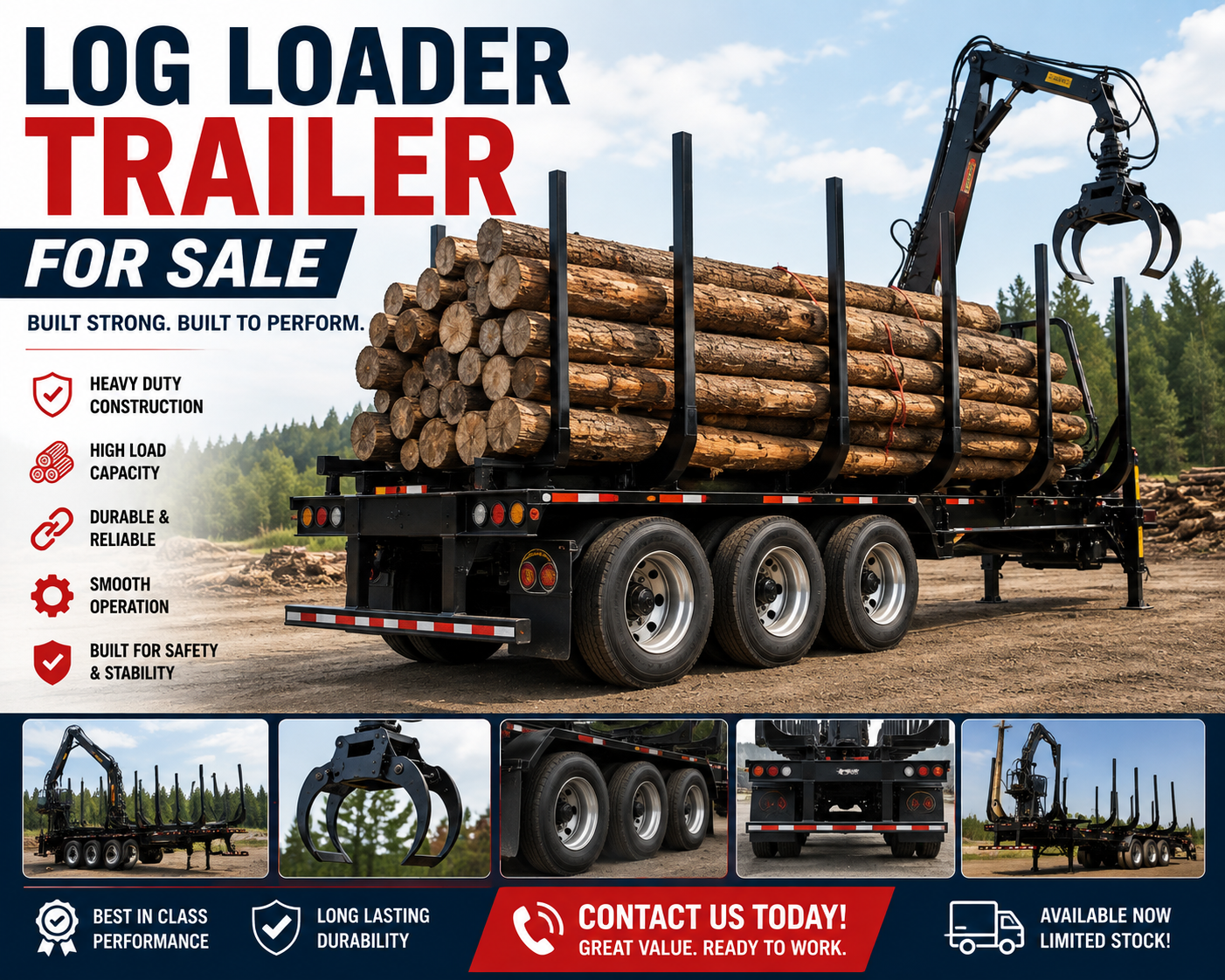
Efficient timber transport can make a noticeable difference in forestry, woodland maintenance, and firewood operations. Once trees are cut, logs must be collected and moved from the harvesting area to a landing, storage site, or processing zone. Because timber is heavy and difficult to handle, unsuitable hauling methods can create unnecessary delays. Well-matched log trailers provide a practical way to organize this stage of the job while reducing repeated material handling. The right setup can help operators move timber more consistently across working properties while keeping the overall workflow manageable.
Selecting appropriate hauling equipment is not simply a matter of choosing the largest available capacity. Terrain, log dimensions, towing equipment, loading methods, maneuverability, and worksite access all influence how effectively a trailer performs in everyday conditions.
Start With the Work You Actually Do
Every forestry operation has different transportation requirements. A landowner clearing occasional storm-damaged trees may have very different needs from an operator regularly moving harvested timber.
Before comparing log trailers, estimate how frequently timber needs to be moved and what a typical load looks like.
Consider whether transportation happens mainly within a single property or whether the equipment must regularly move between different working areas. Understanding these basic requirements provides a clearer starting point for selecting a suitable configuration.
Identify Typical Log Dimensions
Log size has a direct impact on transportation requirements.
Long, large-diameter timber needs different support and handling than short, lightweight material. Instead of basing your decision on the largest log you might occasionally encounter, focus primarily on the timber handled during normal operations.
Consistency matters as well. If log dimensions vary substantially, the transportation setup should provide enough flexibility to accommodate those changing loads.
Understand the Importance of Terrain
Forestry equipment frequently operates away from smooth, maintained surfaces.
Mud, slopes, tree roots, ruts, loose ground, and narrow woodland tracks can all affect towing performance. As a result, log trailers should be evaluated in the environment where they will actually work.
Equipment that performs well around an open processing yard may face very different challenges when navigating densely wooded terrain.
Ground Conditions Can Change Quickly
Seasonal conditions deserve consideration.
A route that remains firm during dry weather may become soft or difficult after heavy rain. Winter conditions can introduce additional challenges depending on the location and type of work.
Operators should consider how frequently difficult terrain occurs and plan equipment use accordingly.
Match the Trailer With the Towing Equipment
A timber trailer works as part of a larger transport system. The towing equipment must be suitable for the intended operating conditions and loads.
When assessing log trailers, consider how the trailer dimensions and expected load relate to the towing setup.
Balance is particularly important. Poorly arranged timber can affect stability and handling, especially on uneven surfaces or during changes in direction.
Operators should follow the appropriate operating guidance and remain within applicable equipment limitations.
Look Closely at Maneuverability
Capacity often receives the most attention during equipment selection, yet maneuverability can be equally important.
Forestry routes frequently include narrow entrances, trees, gates, tight corners, and limited turning areas. Oversized equipment can become inconvenient if it cannot move comfortably through these spaces.
Before selecting log trailers, examine the routes that will be used regularly.
Map the Working Route
A simple site assessment can reveal potential problems before equipment enters the area.
Identify the narrowest access points, steep sections, turning spaces, and likely loading locations. Also consider whether the towing equipment has sufficient room to position itself correctly.
Operators researching different forestry hauling configurations may also find a forestry and timber transport equipment location useful when evaluating equipment needs alongside their working environment.
Plan How Logs Will Be Loaded
Transportation efficiency begins before the trailer starts moving.
Logs must first reach the loading area and then be placed securely for transportation. Large timber can be difficult or impractical to handle manually, so the loading method should reflect normal log dimensions and workload.
An organized loading area can reduce unnecessary repositioning and keep material moving steadily.
Avoid Creating a Loading Bottleneck
A high-capacity trailer provides limited benefit if loading takes an excessive amount of time.
Ideally, timber should arrive at the loading point in a predictable sequence. Operators should have enough working room to position logs without repeatedly moving equipment or previously stacked material.
Improving this stage can have a significant effect on overall productivity.
Consider Unloading Before Leaving the Forest
Operators sometimes concentrate on collection and transportation while giving less attention to the destination.
Before logs are loaded, decide where they will be unloaded. Timber heading for processing should ideally be placed where it can move naturally into the next stage of production.
Strategic unloading can prevent logs from being handled multiple times.
Create a Logical Material Flow
A practical workflow might move timber from harvesting to collection, transportation, unloading, processing, and final storage.
Each stage should connect naturally with the next. When material repeatedly travels backward across a worksite, time and effort are usually being wasted.
Properly integrated log trailers can help create a more direct flow between woodland and processing areas.
Durability Matters in Forestry Conditions
Timber transportation places substantial demands on equipment.
Heavy loads, uneven ground, vibration, debris, and changing weather conditions can contribute to wear. Construction quality and suitability for forestry use should therefore be considered alongside capacity.
Equipment should also be inspected routinely so developing maintenance issues can be identified early.
Make Inspection Part of the Routine
Regular checks should cover relevant structural areas, connection points, tires, wheels, and working components according to appropriate operating and maintenance instructions.
Cleaning away accumulated debris can also make inspections easier.
A consistent maintenance routine helps operators recognize wear before it contributes to avoidable downtime.
Efficiency Is About More Than Carrying More
Moving the largest possible load is not automatically the most efficient approach.
Productivity depends on loading time, travel speed appropriate to conditions, maneuverability, unloading efficiency, and the time required to prepare for another trip.
For some operations, a manageable setup completing consistent cycles may prove more practical than equipment that carries more timber but is difficult to position or load.
Conclusion
Choosing suitable log trailers means looking beyond basic carrying capacity. Timber dimensions, towing compatibility, terrain, access, maneuverability, loading efficiency, unloading arrangements, and maintenance requirements all influence real-world performance.
The most effective setup is one that fits naturally into the complete forestry workflow. When timber can move efficiently from the harvesting area to its next destination with minimal unnecessary handling, operators can make better use of both equipment and working time. Careful planning ultimately creates a timber transport system that is practical, organized, and ready for demanding woodland conditions.