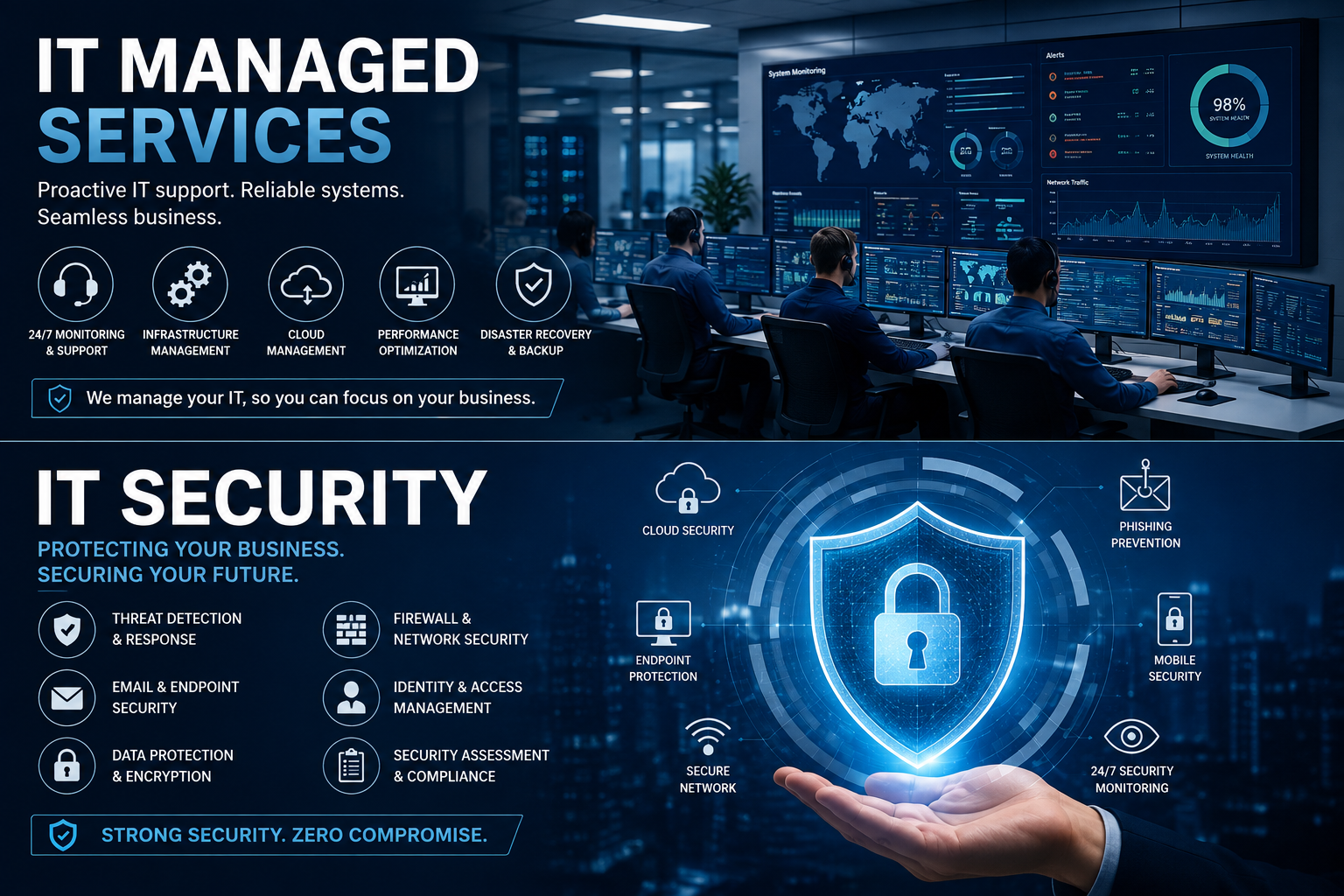
Business technology has become more connected, flexible, and essential than ever before. Employees access information from different devices, organizations depend on cloud-based applications, and sensitive data moves across networks throughout the working day. While this connectivity improves productivity, it also creates security responsibilities that require constant attention.
Managed IT security services provide a structured approach to protecting business technology. Instead of relying on isolated security measures, organizations can combine monitoring, access management, system maintenance, data protection, and security planning into a coordinated strategy.
A proactive security approach helps businesses identify weaknesses earlier, reduce avoidable risks, and respond more effectively when unusual activity occurs.
Why Modern Businesses Need Continuous IT Security
Cybersecurity is not a task that can be completed once and forgotten. Technology environments change constantly. Employees join and leave, new devices connect to networks, applications receive updates, and business processes evolve.
At the same time, security threats continue to change.
Managed IT security services help organizations address this dynamic environment through ongoing oversight. Rather than waiting for a security incident to reveal a weakness, businesses can regularly evaluate systems and strengthen areas that need attention.
This continuous approach makes cybersecurity part of normal operations.
Creating Multiple Layers of Protection
No single security measure can protect an entire organization. Effective cybersecurity depends on multiple controls working together.
Protecting Devices and Networks
Computers, laptops, servers, mobile devices, and network equipment can all become potential entry points if they are not properly managed.
Managed IT security services can support consistent configurations, security monitoring, software maintenance, and device protection. These measures help reduce gaps created by forgotten updates or inconsistent settings.
Organizations seeking professional cybersecurity guidance can also benefit from reviewing how well their existing security measures work together rather than evaluating individual tools in isolation.
Layered protection creates additional barriers if one control fails.
Managing User Access More Carefully
People need convenient access to business systems, but excessive permissions can increase risk. Organizations should ensure employees can access what they need without automatically receiving unnecessary privileges.
Applying Access Based on Responsibilities
Managed IT security services can help establish procedures for account creation, permission changes, authentication, and account removal.
When an employee changes roles, access should be reviewed. When someone leaves the organization, accounts should be disabled promptly.
Regular permission reviews can also identify old accounts or unnecessary access that may otherwise remain unnoticed.
Strong access management reduces the number of opportunities for unauthorized activity.
Keeping Systems Updated
Outdated software is a common source of technology risk. Developers frequently release updates that address identified vulnerabilities, but businesses may delay installation because of workload, compatibility concerns, or limited technical resources.
A consistent patching process can reduce this exposure.
Managed IT security services can help organizations identify systems requiring updates, evaluate priorities, and maintain regular maintenance schedules.
Why Patch Management Needs Structure
Updating a few employee computers manually may be manageable for a very small organization. As the number of devices and applications increases, however, maintaining consistency becomes harder.
A structured approach improves visibility. Technical teams can better understand which systems are current and which require attention.
This makes patch management an ongoing security process rather than an occasional task.
Protecting Critical Business Data
Business information can be affected by hardware failures, accidental deletion, unauthorized access, or cyber incidents. Security planning should therefore include both prevention and recovery.
Managed IT security services can help businesses develop backup procedures that reflect the importance of different systems and data.
Preparing for Recovery
Creating backups is only one part of data protection. Organizations should also understand how information will be restored after an incident.
Recovery procedures should identify critical systems, restoration priorities, responsibilities, and expected recovery processes.
Testing matters as well. A backup that has never been tested may not provide the level of protection an organization expects.
Regular recovery testing gives businesses greater confidence that important information can be restored when needed.
Monitoring for Unusual Activity
Some security problems are obvious, while others may develop quietly. Unusual login attempts, unexpected system behavior, or changes in network activity can indicate that further investigation is necessary.
Managed IT security services can provide continuous monitoring that helps technical teams recognize suspicious patterns.
Improving Response Through Early Detection
The sooner unusual activity is identified, the sooner an organization can evaluate the situation.
Early detection may help limit the scope of an incident and provide technical teams with more time to respond. Monitoring also creates useful information that can support investigation and future security improvements.
The objective is not simply to generate alerts but to identify meaningful activity and respond appropriately.
Addressing the Human Side of Cybersecurity
Technology controls are essential, but employees also influence security every day. People handle passwords, open messages, share information, and access business applications.
For this reason, security awareness should complement technical protection.
Managed IT security services may support policies and educational initiatives that help employees recognize suspicious behavior and understand their responsibilities.
Building Practical Security Habits
Security guidance is most effective when employees can apply it during normal work.
Clear procedures can help staff understand how to handle unexpected login requests, suspicious communications, sensitive information, and unusual system activity.
Creating a security-conscious culture adds another layer of protection without preventing employees from working efficiently.
Connecting Security With Business Continuity
Cybersecurity and business continuity are closely related. A security incident can affect productivity, customer communication, access to information, and normal operations.
Organizations should therefore prepare for how they will continue functioning if important technology becomes temporarily unavailable.
Managed IT security services can help businesses identify critical systems and develop response priorities before an incident occurs.
Planning in advance reduces confusion and allows teams to follow established procedures during high-pressure situations.
Reviewing Security as the Organization Grows
Security requirements change as businesses expand. New employees, additional locations, remote working arrangements, new applications, and larger volumes of information can create different risks.
Managed IT security services can support regular assessments to determine whether existing controls remain appropriate.
These reviews can identify emerging vulnerabilities, outdated processes, access issues, or infrastructure changes that require attention.
Security planning should evolve alongside the organization rather than remain based on conditions that existed years earlier.
Conclusion
Cybersecurity requires more than installing protective tools and responding when something goes wrong. Businesses need consistent processes for monitoring, updating systems, controlling access, protecting data, educating employees, and preparing for potential disruptions.
Managed IT security services bring these responsibilities together within a coordinated framework. Through proactive oversight and regular improvement, organizations can reduce avoidable vulnerabilities while building stronger resilience.
Ultimately, managed IT security services help businesses treat cybersecurity as an ongoing operational priority. A well-managed security environment protects important information while giving employees the dependable technology they need to work productively and confidently.