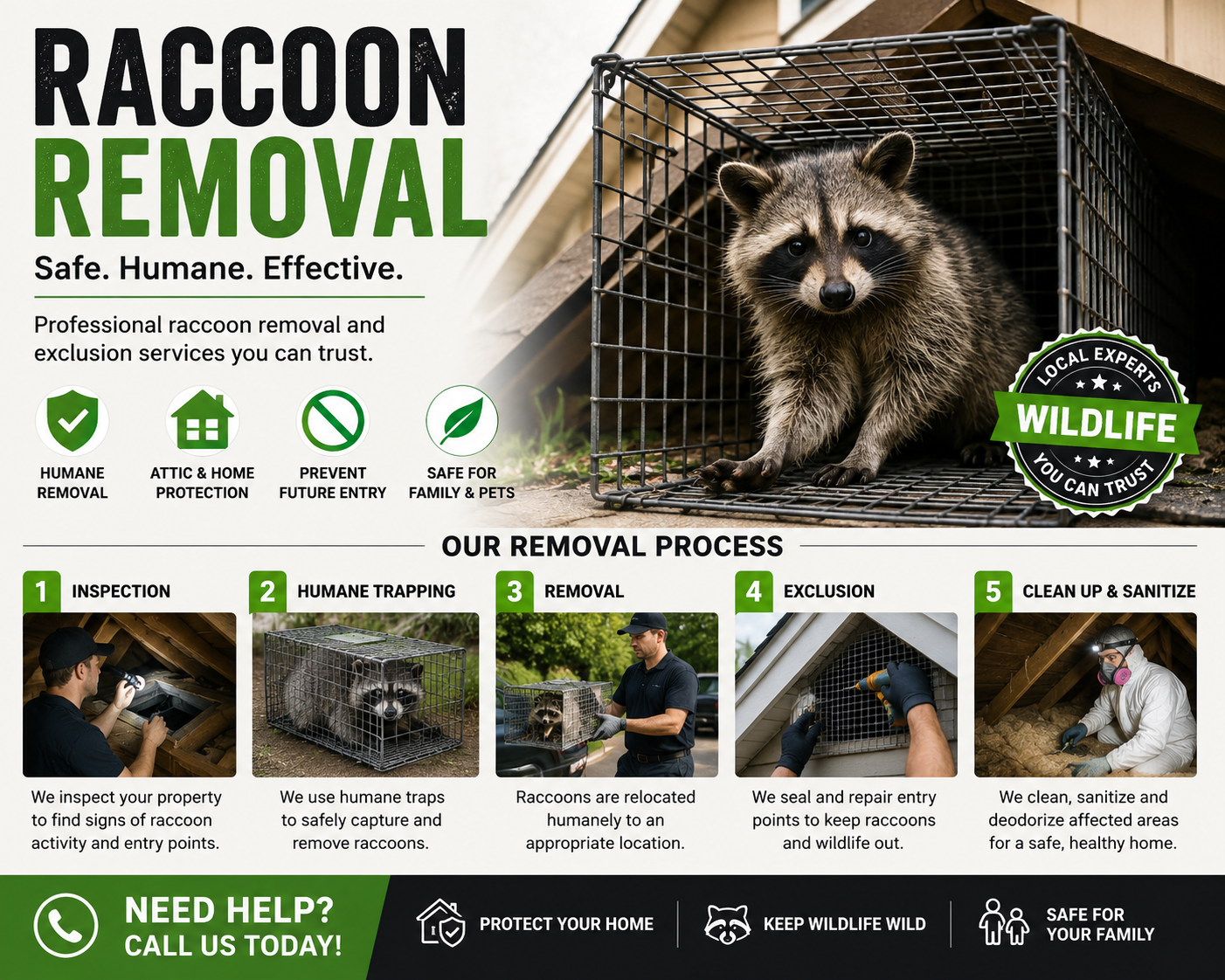
Raccoons are intelligent, adaptable animals that can thrive surprisingly well in urban environments. While seeing one outdoors may not be unusual, problems begin when raccoons enter attics, chimneys, garages, sheds, or other areas of a property. Once inside, they can damage insulation, disturb roofing materials, contaminate spaces, and create persistent noise.
For property owners dealing with unwanted wildlife, understanding the right approach to raccoon removal London Ontario can help prevent unnecessary damage while encouraging safe and responsible removal.
Why Raccoons Enter Residential Properties
Raccoons are constantly searching for three basic things: food, water, and shelter. Residential neighbourhoods can provide all three.
Accessible garbage containers, pet food, compost, bird feeders, gardens, and fallen fruit can attract raccoons to a property. Once they begin visiting regularly, they may discover a suitable place to shelter.
Attics are particularly attractive because they provide warmth and protection from weather and predators. Chimneys, decks, crawl spaces, and sheds can also become potential denning locations.
Common Raccoon Entry Points
Raccoons are strong enough to exploit weak areas around a building. Common access points include:
- Loose roof vents
- Damaged soffits
- Open chimneys
- Gaps around rooflines
- Broken fascia boards
- Spaces beneath decks
- Unsecured sheds or garages
A small structural weakness can quickly become a larger opening when a determined raccoon begins pulling at it.
Signs That a Raccoon May Be Present
Raccoon activity is often most noticeable at night because these animals are primarily nocturnal. Property owners may hear scratching, walking, thumping, or movement coming from an attic or roof area after sunset.
Another common warning sign is visible damage around an entry point. Roofing materials may appear disturbed, vents may be bent, or soffits may have been pulled away.
Droppings can also indicate recurring activity. In outdoor areas, raccoons may repeatedly use the same location for waste.
Recognizing these signs early can make the situation easier to address.
Why Safe Raccoon Removal Matters
Attempting to chase or trap a raccoon without understanding its behaviour can create additional problems. An animal may retreat deeper into a structure, become defensive, or find another inaccessible hiding place.
Seasonal considerations are equally important. During certain times of the year, a female raccoon may establish a den where young are present. Removing an adult without checking for babies could leave dependent animals behind.
A responsible approach to raccoon removal London Ontario should therefore focus on identifying the complete wildlife situation before attempting exclusion.
Inspection Comes First
A detailed property inspection helps determine where the animal is entering, whether multiple access points exist, and which areas are vulnerable.
Inspection should include the roofline, vents, soffits, chimney, attic, deck, garage, and other potential shelter locations.
The goal is not simply to locate the raccoon. It is also to understand why the property became accessible in the first place.
Exclusion and Prevention Work Together
Removing wildlife addresses the immediate concern, but exclusion helps reduce the chance of the same problem returning.
Once it has been confirmed that animals are no longer inside, vulnerable openings can be repaired or secured. Strong materials are particularly important because raccoons can pull apart weak barriers.
Homeowners looking for local wildlife removal assistance should consider approaches that include both removal and prevention rather than focusing only on the animal currently present.
Make the Property Less Attractive
Simple property-management changes can also discourage future visits.
Keep garbage containers securely closed and avoid leaving pet food outdoors overnight. Clean up fallen fruit and food waste promptly. Compost should be properly contained, and damaged exterior areas should be repaired before wildlife discovers them.
Tree branches that provide convenient roof access may also need attention where appropriate.
What to Do After Raccoon Activity
After the raccoon has left, inspect the affected space for contamination and structural damage. Insulation may have been compressed or disturbed, while entry areas could require repair.
Do not assume that sealing the visible opening alone solves the problem. Other vulnerable areas should also be examined because raccoons are skilled climbers and may search for another way inside.
Monitoring the property afterward can help identify renewed activity before another animal becomes established.
Conclusion
Raccoons are resourceful wildlife, and residential properties can unintentionally provide ideal shelter. Effective raccoon removal London Ontario begins with understanding how the animal entered, identifying whether additional wildlife is present, and choosing a safe removal strategy.
Long-term prevention is just as important as solving the immediate problem. Securing entry points, managing food attractants, maintaining exterior structures, and watching for early warning signs can significantly reduce future encounters.
By combining careful inspection, responsible removal, exclusion, and preventative property maintenance, homeowners can protect their living spaces while handling wildlife concerns in a practical and responsible way.