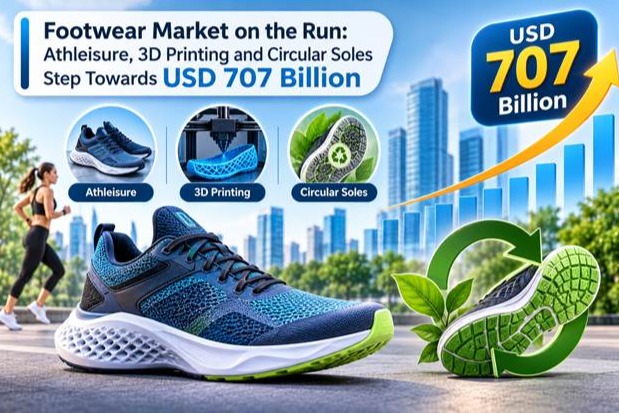
Shoes now do much more than protect feet. Runners chase carbon plates, office workers wear sneakers to meetings, and shoppers scan labels for recycled content. Brands, meanwhile, test 3D printing, AI design and resale-ready drops. As a result, a familiar product is turning into a technology and style race. This guest post reviews the numbers, drivers, trends, segments and players behind it.
The global footwear market attained a value of USD 437.96 billion in 2025. Moreover, it should reach USD 706.63 billion by 2035, growing at a CAGR of 4.90% during 2026-2035. Rising sports participation and fitness programmes boost demand for comfortable, durable and customisable shoes. In fact, buyers now expect performance features even in everyday pairs.
Footwear Market Snapshot
- Market value in 2025: USD 437.96 billion
- Forecast for 2035: USD 706.63 billion
- CAGR (2026-2035): 4.90%
- Non-athletic share in 2025: about 57.23%
- Athletic footwear value in 2025: USD 145.49 billion
- Running shoes value in 2025: USD 54.84 billion
- Asia Pacific growth: 6.2% CAGR
- Fastest-growing country: China (6.6% CAGR)
What Is Driving Growth
The Athleisure Wave
Athleisure blends gym comfort with street style. Therefore, one pair now serves office, travel and weekend plans. Athleisure footwear made up about 42% of global footwear sales in 2024, and premium sneakers earn strong margins for brands.
Rising Incomes in Emerging Economies
Growing middle classes in China, India, Vietnam, Indonesia and Brazil want branded shoes. Social media and sports sponsorship shape those tastes. Consequently, even first-time buyers often choose premium models.
Online and Direct-to-Consumer Sales
E-commerce held about 38.7% of footwear revenue in 2024. It also grows at roughly 5.38% CAGR. Meanwhile, direct-to-consumer brands collect purchase data and keep more margin.
Sneaker Culture and Resale
Limited drops and collaborations turn sneakers into collectibles. The global resale market passed USD 10 billion in 2025, according to the report. In addition, secondary-market premiums lift demand for new releases.
Key Trends and Developments
Performance Technology
Brands compete on foam, plates and weight. In April 2026, adidas launched the 97-gram Adizero Adios Pro Evo 3 for elite racing. Likewise, Allswifit introduced its STEDI Collection in June 2026 with stability and hands-free design.
Digital Design and Custom Fit
AI and 3D printing shorten development time and cut waste. In December 2025, Fitasy unveiled smartphone-based spatial AI and 3D printing for affordable custom-fit shoes. Similarly, Kornit Digital launched on-demand footwear printing in October 2025.
Circular and Low-Carbon Materials
Producers adopt recycled resins and bio-based fibres. Dow launched low-carbon footwear materials in November 2024, while ECCO released BIOM 720 in April 2026 using protein-based fibres from leather by-products. The sustainable segment alone reached about USD 9.6 billion in 2025.
Store Expansion in India
- Metro Brands passed 1,000 stores across India in March 2026.
- Relaxo announced plans for 100 new exclusive stores in May 2026.
- RedCloud signed a USD 120 million Indian joint venture in June 2026 for AI commerce in footwear distribution.
Market Segmentation
By Type
The footwear market divides into non-athletic and athletic products. Non-athletic leads, because shoes, boots, sandals and slippers suit work, daily life and fashion. Athletic footwear, however, grows fastest, supported by running, training and court sports. Sneakers sit between the two, thanks to athleisure.
By Material, Price and End Use
Materials include rubber, leather, plastic and fabric. Fabric gains ground for its light weight and eco-friendly options. Mass-priced products win on affordability, whereas premium lines grow through collaborations and technology. Women’s footwear should expand at 5.4% CAGR, helped by fashion variety and a larger female workforce.
By Distribution Channel
Channels cover supermarkets, footwear specialists, department stores, clothing stores and online platforms. Specialists offer fit advice and wide choice. Online sales, in contrast, keep gaining as shoppers compare reviews and use digital fitting tools.
By Region
Asia Pacific leads on manufacturing scale, population and rising spending, and it should grow at 6.2% CAGR. Brazil follows at 5.6%. North America favours premium and performance shoes, while Europe stresses sustainability.
Trade and Supply Chain Shifts
Tariffs are reshaping sourcing. China’s US footwear shipments fell about 29% in a single year. Meanwhile, Vietnam became the top US supplier in 2025, with a 36.3% value share. Indonesia and India also gain as brands diversify factories.
Competitive Landscape
Brands compete on cushioning, sustainable materials, digital design and direct sales. Key players include:
- Nike, Inc.: performance technology and digital retail
- PUMA SE: running innovation and athlete partnerships
- Skechers USA, Inc.: comfort-led casual and work footwear
- Adidas AG: recycled materials and premium lifestyle ranges
Other notable companies include VF Corporation, Crocs, Under Armour, FILA, Prada, Burberry, Bata, ECCO and Geox.
Key Challenges
- Counterfeit products on online marketplaces
- Volatile rubber, leather and polymer costs
- Tariff changes that disrupt supply chains
- Greenwashing risks around sustainability claims
Conclusion
With 4.90% annual growth ahead, the footwear market offers strong potential in athleisure, custom fit and circular materials. Therefore, brands should invest in digital design, credible sustainability and flexible sourcing. Expert Market Research offers detailed forecasts, segment data and competitor profiles to support these decisions.
Frequently Asked Questions
- How big was the industry in 2025?
It reached approximately USD 437.96 billion in 2025. - What is the growth forecast?
It should reach USD 706.63 billion by 2035, growing at a CAGR of 4.90% from 2026. - Which type grows fastest?
Athletic footwear grows fastest. Meanwhile, non-athletic footwear holds about 57.23% of the share. - Which region leads?
Asia Pacific leads on scale and should grow at 6.2% CAGR, with China expanding at 6.6%. - Who are the key players?
Key players include Nike, PUMA, Skechers, Adidas, VF Corporation, Crocs, Under Armour and ECCO.