When it comes to personal finances, understanding how interest works is vital, especially when planning for loans. The simple interest formula is a fundamental concept that allows borrowers to determine the cost of borrowing money without the complexities of compound interest calculations. In this article, we will dive into the simple interest formula, its application in loan calculations, and the specific case of personal loans for low salaries.
Understanding the Simple Interest Formula
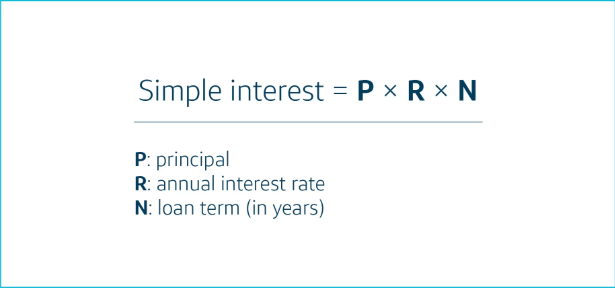
The simple interest formula can be expressed as:
I = P * r * t
Where:
- I: Interest earned or paid
- P: Principal amount (the initial sum of money)
- r: Interest rate (in decimal form)
- t: Time period (in years)
The formula is straightforward and can be utilized to calculate interest for various loan types. However, before using it for personal loans, let’s break down its components further.
Principal Amount (P)
The principal is the initial sum of money borrowed or invested. In the context of a personal loan, it represents the total amount you are borrowing from the lender. For instance, if you take out a $5,000 personal loan, your principal (P) is $5,000.
Interest Rate (r)
The interest rate is the percentage charged by the lender for borrowing money. It’s typically expressed as an annual percentage rate (APR). If your loan agreement states an APR of 6%, the decimal form of the interest rate will be 0.06 for our calculations.
Time Period (t)
The time period is the duration over which the loan will be repaid. For most personal loans, this duration can range from one to several years, depending on the lender’s terms. If you plan to repay your personal loan over 3 years, your time period (t) will be 3.
Applying the Simple Interest Formula to Personal Loans
Now that we understand the basic components of the simple interest formula let’s see how to apply it to a hypothetical personal loan. Suppose you are considering a $5,000 personal loan with an annual interest rate of 6%, and you plan to repay it over 3 years.
Using the simple interest formula:
- Identify the Variables:
- P = $5,000
- r = 0.06 (6% expressed as a decimal)
- t = 3 years
- Calculate the Interest:
- I=P*r*t
- I=5000*0.06*3=900
So, the total interest you would pay over the life of the loan is $900.
- Calculate the Total Amount to Be Repaid:
To find out how much you will repay in total (the principal plus interest), simply add the interest to the principal amount: - TotalRepayment=P+I=5000+900=5900
Thus, you will repay $5,900 over the 3 years.
Interest Calculations for Low Salary Borrowers
For individuals with a low salary, personal loans can be daunting due to financial constraints. Understanding the simple interest formula can help low-salary borrowers make informed decisions when taking out loans.
Key Considerations for Low Salary Borrowers
- Affordability: Ensure that the monthly repayment amount fits comfortably within your budget.
- Comparing Offers: Different lenders have different interest rates and terms. Use the simple interest formula to compare total repayment amounts across various loan options.
- Use a Loan Calculator: Online loan calculators can also apply the simple interest formula for you, providing quick insights into how much you will pay in interest.
Pros and Cons of Simple Interest Loans
While the simple interest formula is straightforward, personal loan for low salary using this formula can have their advantages and disadvantages:
Advantages
- Clarity: The simple interest calculation provides an easy-to-understand view of what you owe.
- Predictable Payments: For loans calculated using simple interest, monthly payments are predictable, which can help in budgeting.
Disadvantages
- Higher Total Interest: Personal loans often come with higher interest rates for those with lower salaries, resulting in more significant total interest payments.
- Limited Flexibility: If you have the option to make additional payments, it may be less beneficial than with compound interest loans.
Conclusion
Applying the simple interest formula to loan calculations is an essential skill for anyone considering taking out a personal loan. Knowing how to determine the total interest and overall repayment amount can significantly influence your financial decisions.
For those with a low salary, it is crucial to assess personal loan options carefully, ensuring they are feasible in the long run. Armed with the knowledge of the simple interest formula, you can better navigate the borrowing landscape, making sound financial choices that align with your budget and financial goals. By being educated and cautious when choosing a personal loan, even individuals with lower salaries can secure the funds they need while managing their debt responsibly.