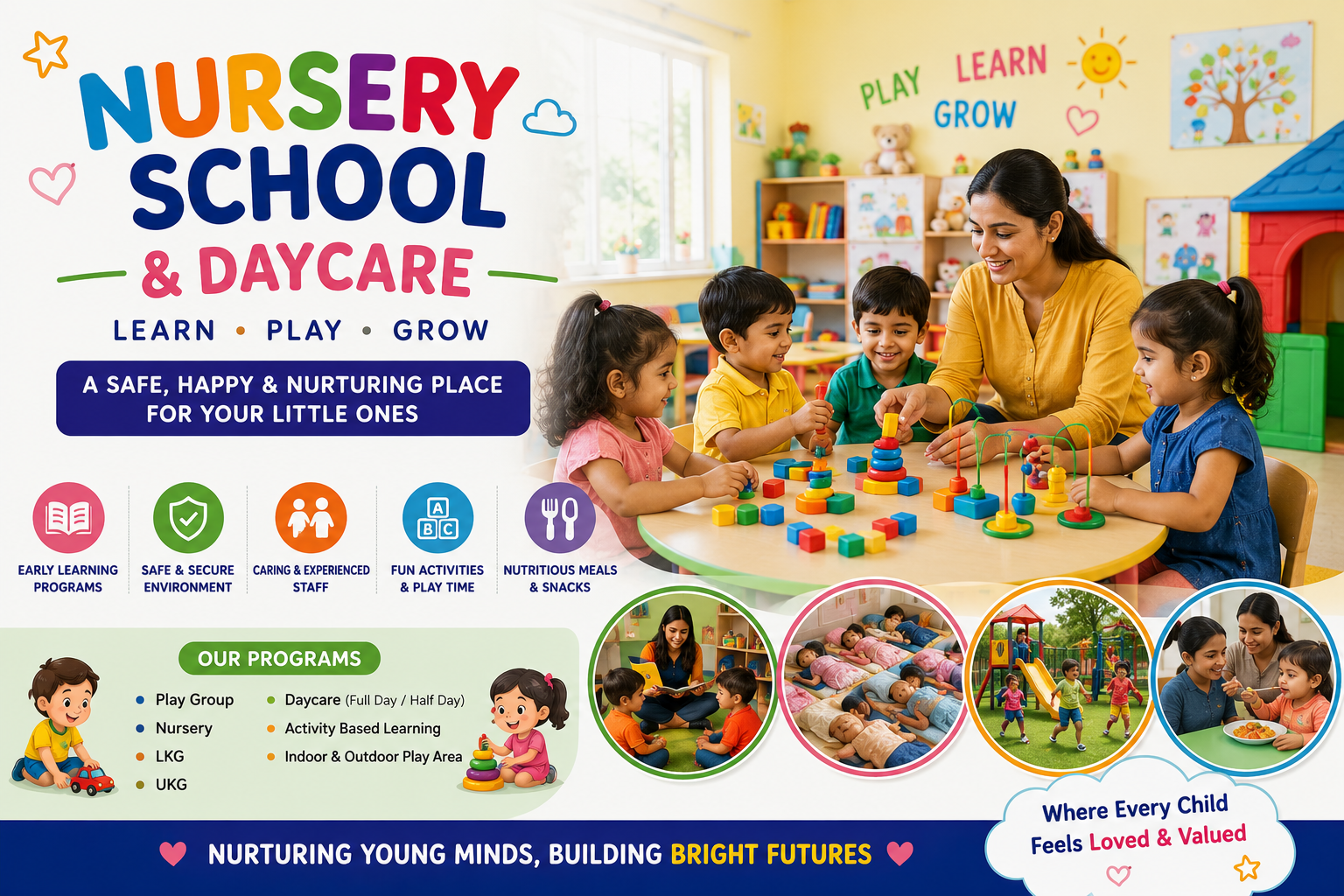
Starting a nursery school is an important transition in a young child’s life. For many children, it is their first opportunity to spend regular time in a structured environment outside the home. They meet new people, experience different routines, participate in group activities, and gradually learn how to manage simple tasks independently.
A positive nursery experience does much more than introduce letters, numbers, colors, or shapes. It can nurture confidence, curiosity, communication, creativity, physical coordination, and social awareness. Understanding these broader benefits can help parents recognize what really matters when selecting an early learning environment.
Nursery School Creates a Gentle Introduction to Learning
Young children are naturally curious. They want to know why things happen, how objects work, and what they can accomplish independently.
A thoughtfully designed nursery school uses that curiosity as a starting point. Rather than relying entirely on formal instruction, educators can introduce concepts through stories, games, conversations, practical activities, music, movement, and hands-on exploration.
This makes learning feel natural rather than forced.
Familiar Routines Create Security
Predictability can help young children settle into a new environment. A consistent daily rhythm allows them to understand what happens next.
For example, children may gradually become familiar with arrival time, classroom activities, snacks, outdoor play, storytelling, and departure routines. Knowing what to expect can reduce uncertainty and allow children to participate more confidently.
Confidence Develops Through Small Achievements
Children experience many opportunities for accomplishment during nursery.
Completing a puzzle, putting away materials, finishing an art activity, joining a group song, or communicating a need to an educator may seem ordinary to an adult. For a young child, however, these moments can represent meaningful progress.
A supportive nursery school gives children opportunities to attempt suitable tasks before adults immediately intervene.
Encouragement Is More Valuable Than Pressure
Children develop at different rates. One child may eagerly participate in conversations while another prefers to observe before joining.
Educators should recognize these individual differences. Encouraging effort and progress can help children develop confidence without creating unnecessary comparisons.
The objective is steady development rather than expecting every child to achieve exactly the same milestone at the same time.
Social Skills Grow Through Real Experiences
Spending time with other children introduces situations that cannot always be recreated at home.
Children learn that classmates may want the same toy, have different ideas, or respond differently during play. These everyday situations provide opportunities to develop social understanding.
A nursery school can help children practice taking turns, sharing spaces, communicating preferences, and cooperating during group activities.
Learning to Manage Disagreements
Small conflicts are a normal part of early childhood. Instead of viewing every disagreement negatively, educators can use these situations as learning opportunities.
With appropriate guidance, children can begin learning how to express frustration, listen, wait, negotiate, and find simple solutions.
These early social experiences can help prepare children for larger classroom communities later.
Language Development Happens Throughout the Day
Young children develop communication skills through frequent interaction.
Stories, songs, conversations, role play, and picture discussions can introduce new vocabulary while encouraging children to express their thoughts.
Educators can support language development by asking questions that require more than one-word answers. They can also give children sufficient time to think and respond.
A language-rich nursery school environment encourages children to communicate because conversation becomes part of everyday learning.
Creativity Encourages Flexible Thinking
Art and imaginative activities are not simply ways to keep children occupied. They can support important areas of development.
Drawing, painting, building, music, pretend play, and craft activities encourage children to make choices and experiment with ideas.
There does not always need to be one correct result. Creative experiences show children that different approaches can produce interesting outcomes.
This type of flexible thinking can later support problem-solving in many areas of learning.
Physical Activity Is Equally Important
Young children need regular movement. Running, balancing, climbing, dancing, and participating in movement games can strengthen coordination and body awareness.
Fine motor experiences are valuable too. Activities involving drawing, threading, building, transferring objects, or manipulating small age-appropriate materials can strengthen hand control.
A balanced nursery school recognizes that physical development and cognitive learning are closely connected.
Location Should Fit Family Life
Daily convenience deserves consideration alongside educational quality. A difficult commute can make morning and pickup routines unnecessarily tiring.
Families considering early education in Whitefield can review the nursery learning location in Whitefield while evaluating travel time and accessibility.
A practical location can make it easier to establish consistent routines, especially when nursery attendance forms part of a busy family schedule.
Parent Communication Supports Continuity
Parents and educators each see different aspects of a child’s development. Sharing useful observations can create a more complete picture.
Teachers may notice emerging interests, classroom friendships, communication patterns, or new abilities. Parents can provide information about changes in routines or behaviour at home.
A Partnership Benefits the Child
Communication does not need to focus only on problems. Sharing positive developments can help both families and educators understand what motivates the child.
When adults communicate consistently, they can provide more connected support across home and nursery environments.
Conclusion
A nursery school can provide an important foundation for children’s early development by combining learning with exploration, movement, creativity, communication, and social interaction.
Parents should look beyond purely academic expectations when evaluating an environment. Teacher-child relationships, classroom routines, opportunities for independence, physical activity, emotional support, and family communication all contribute to the nursery experience.
When children feel secure enough to explore and supported enough to try unfamiliar things, they can gradually develop confidence in their own abilities. A positive beginning can help transform education from something children simply attend into something they genuinely enjoy discovering.