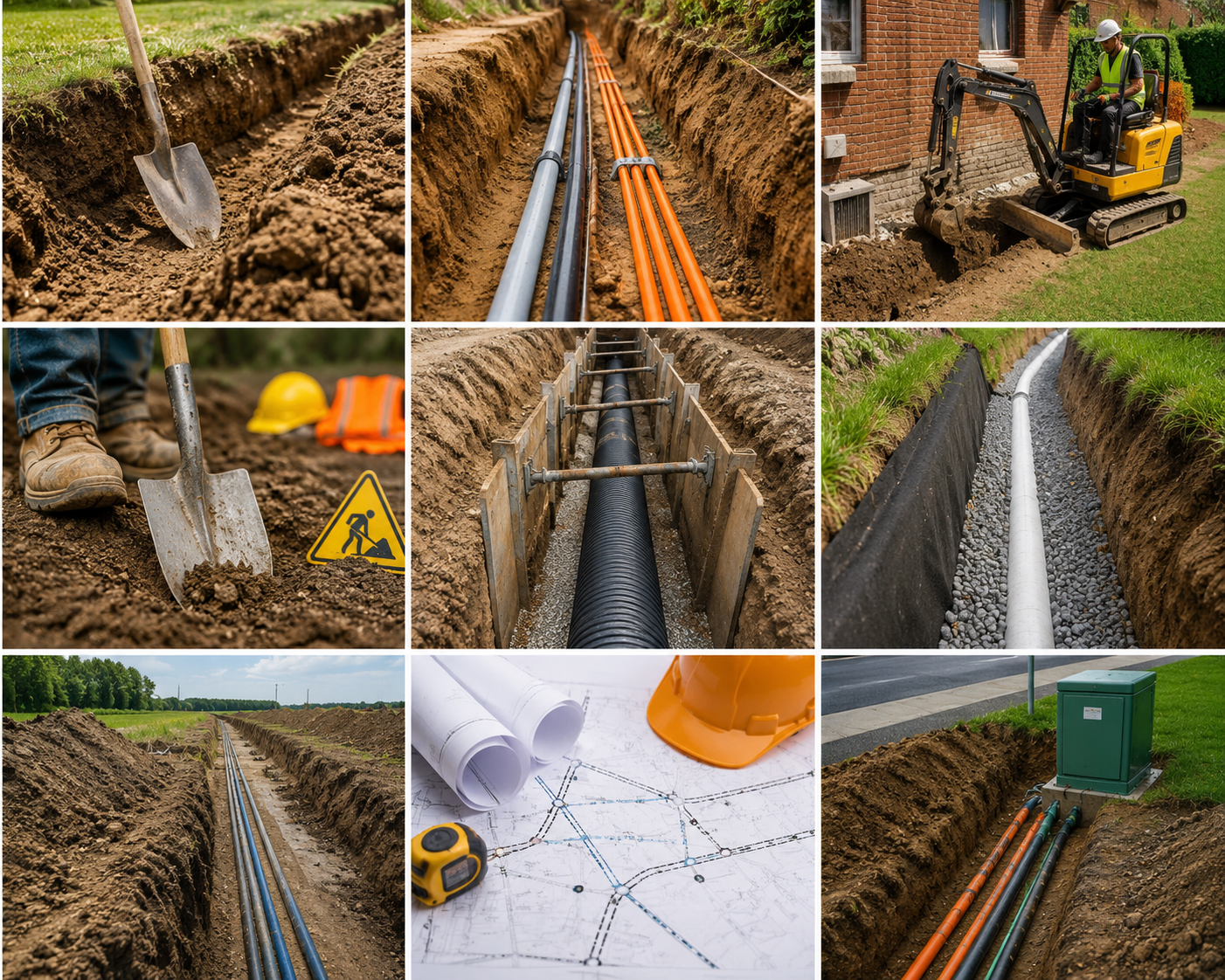
Water can become a serious concern when it repeatedly collects in the wrong areas of a property. Saturated lawns, muddy sections, erosion, and standing water often indicate that runoff is not moving efficiently. In some situations, a properly planned trench can help create a controlled route for drainage infrastructure and improve overall water management.
However, drainage excavation requires careful planning. Before you dig trenches for drainage purposes, it is important to study how water currently moves across the property. Depth, slope, soil composition, existing underground infrastructure, and the final ground elevation can all influence the effectiveness of the finished project.
Start by Observing Water Movement
Drainage planning should begin before excavation equipment touches the ground. One of the most useful steps is observing the property during or shortly after rainfall.
Look for areas where water naturally collects. Pay attention to runoff coming from higher ground, roof drainage areas, paved surfaces, and neighboring sections of the property.
These observations help identify whether water follows a predictable route or spreads across a larger area.
Locate High and Low Points
Elevation changes influence the direction water travels. Even differences that appear minor can affect drainage performance.
Identify higher sections, natural depressions, and areas where water consistently remains after rainfall. Understanding these points can help determine an appropriate route for the proposed excavation.
The objective is not simply to remove water from one wet area. The entire drainage path needs to be considered so the project does not unintentionally move the problem somewhere else.
Choose the Trench Route Carefully
Once water movement is understood, the next step is planning a practical excavation route.
The route should account for buildings, gardens, trees, driveways, walkways, fences, retaining structures, and other property features. Existing landscaping can significantly influence where excavation can occur with minimal disruption.
A straight line is not always the most practical option.
Consider the Final Destination of Water
Drainage planning needs a logical endpoint.
Moving water away from one area without considering where it will eventually travel can create erosion, pooling, or unwanted runoff elsewhere. The complete drainage system should therefore be considered before workers dig trenches.
This broader approach helps ensure that excavation supports the intended drainage pattern rather than creating a temporary solution.
Check Existing Underground Conditions
The surface does not reveal everything beneath a property.
Utility infrastructure, drainage components, communication lines, electrical connections, and water pipes may already occupy portions of the proposed route. Existing underground infrastructure should be identified before excavation starts.
Knowing what lies below the ground can influence both the trench route and excavation method.
Expect Changing Soil Conditions
Drainage projects frequently encounter different soil types along a single route.
Clay may retain moisture, while sandy or gravelly soil can allow water to move differently. Compacted fill, rocks, roots, and previously disturbed ground may also appear.
Understanding these variations helps explain why certain areas remain wet and allows excavation to adapt to actual site conditions.
Maintain an Appropriate Trench Slope
Slope is particularly important when workers dig trenches intended to support gravity-based drainage.
An inconsistent trench bottom can create low sections where water remains instead of continuing along the intended route. For that reason, measurements should be taken throughout excavation.
Visual judgment alone may not provide enough accuracy, especially over longer distances.
Avoid Unnecessary Depth
Deeper excavation is not automatically more effective.
The required dimensions should reflect the drainage design and site conditions. Digging unnecessarily deep creates additional soil to manage and increases the amount of backfill required later.
Controlled excavation keeps disturbance focused on the area needed for the project.
Manage Soil During the Work
Excavated material can accumulate quickly during a drainage project. A clear plan for soil placement helps keep the work area organized.
Avoid placing large piles where they block equipment access or interfere with existing drainage paths. Soil should also be kept away from landscaping that could be damaged by excessive weight.
Suitable material may be retained for backfilling, while roots, debris, oversized stones, or other unsuitable materials can be separated.
Think About Backfilling Early
Backfilling should support both the underground installation and the finished surface.
If soil is returned carelessly, it may settle after rainfall and create a visible depression. That depression could eventually become another place where water collects.
Material should therefore be replaced with long-term stability in mind.
Preserve the Intended Surface Grade
The surface above a completed drainage trench also affects water movement.
Final grading should blend with surrounding elevations and avoid creating new low points. Special attention is useful near foundations, paved areas, gardens, and other locations where uncontrolled runoff may cause problems.
Inspect the Area After Rainfall
The first significant rainfall after completion provides an opportunity to evaluate how the restored area performs.
Check whether water moves as intended and whether any new pooling or erosion appears. The ground should also be inspected for settlement along the excavation route.
Small adjustments made early can prevent minor surface issues from becoming more difficult to correct later.
Conclusion
Successful drainage excavation begins with understanding water rather than simply removing soil. Property elevations, runoff patterns, underground infrastructure, soil composition, trench slope, and the final destination of water all need consideration before excavation starts.
When workers dig trenches with these factors in mind, the finished drainage route can function more effectively while limiting unnecessary disturbance. Careful backfilling, grading, and post-project inspection complete the process and help maintain stable ground and dependable drainage over time.