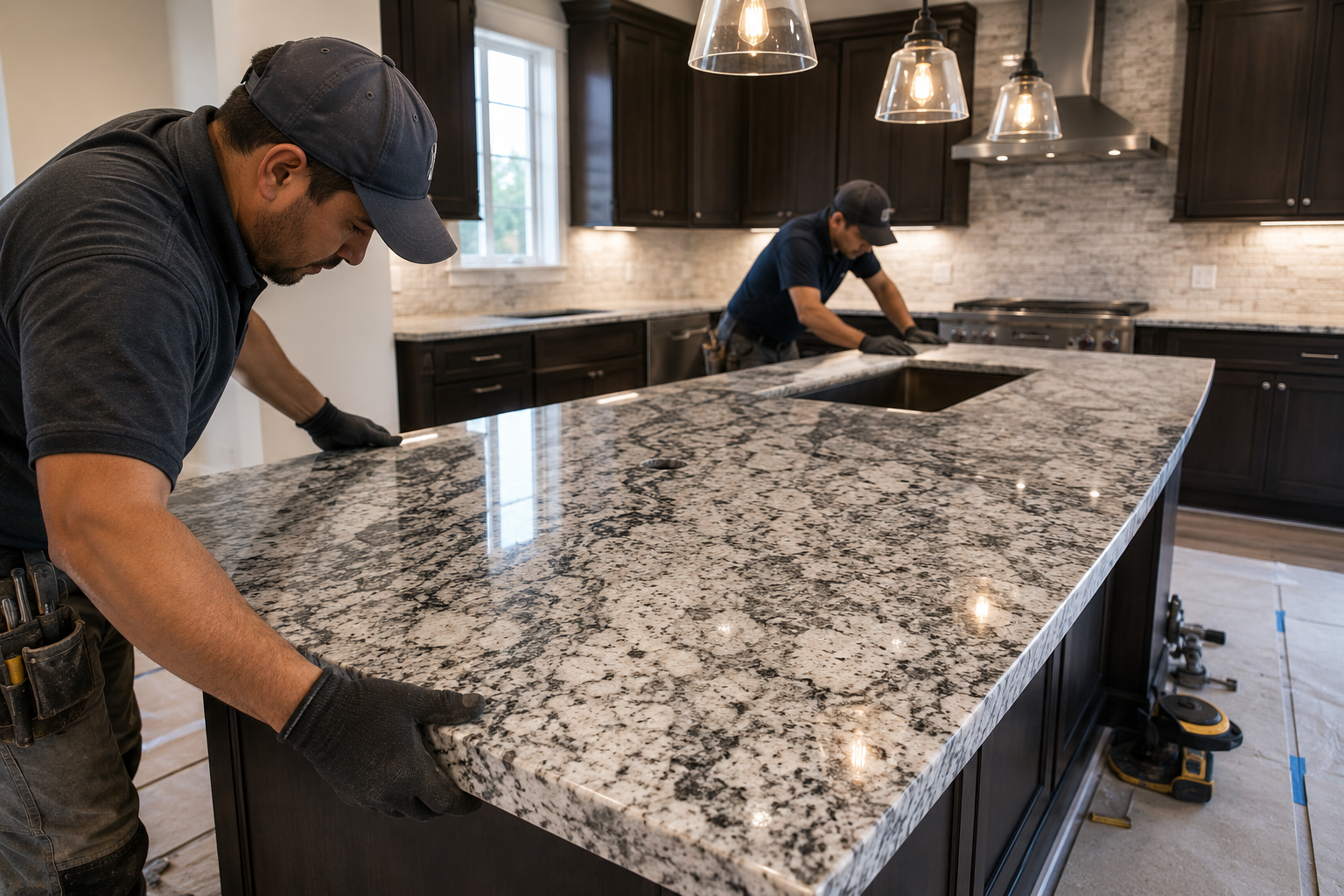
Granite countertops can become a defining feature in a kitchen or bathroom. Their natural patterns add visual depth, while the solid stone surface provides a practical workspace for everyday routines. Still, selecting an attractive slab is only one part of a successful project. Many homeowners search for granite installers near me because accurate installation is essential to achieving a countertop that fits the room properly.
A well-planned project considers measurements, cabinetry, seams, fixtures, access, and final positioning. Knowing what to expect can help homeowners prepare effectively and recognize the details that matter most.
Begin With the Existing Space
Every countertop project starts with the room itself. Even when cabinets and walls appear straight, small variations can affect how granite fits.
Professional granite installers near me should evaluate actual site conditions rather than depend entirely on standard dimensions. Countertop depth, wall angles, cabinet positions, corners, and appliance locations all influence the final layout.
Planning around the existing space can reduce fitting problems during installation.
Confirm the Cabinet Layout First
Cabinets generally need to be installed and secured before final countertop measurements are completed. Moving or adjusting cabinetry afterward can change dimensions that were previously considered accurate.
Homeowners should also check that planned appliances fit appropriately within the cabinet configuration. Finalizing these elements early creates a more dependable foundation for countertop planning.
Understand How Granite Is Different
Granite is a natural material, which means variations are part of its appearance. Patterns, mineral characteristics, and tonal changes can differ across a slab.
When comparing granite installers near me, it can be useful to ask how natural pattern movement is considered during layout and fabrication.
Unlike surfaces designed for complete visual uniformity, granite often looks most appealing when its natural characteristics are incorporated thoughtfully into the countertop design.
Stone Layout Can Influence the Finished Room
The orientation of granite sections can affect how the eye moves through the space. This is particularly noticeable on islands, long countertop runs, and highly visible areas.
Thoughtful planning helps balance distinctive stone features with the dimensions and configuration of the room.
For homeowners exploring granite countertop installation in the local area, discussing layout expectations early can help clarify how the countertop may work with existing cabinetry and fixtures.
Measurements Need More Than Length and Width
Precise countertop measurements account for numerous details. In addition to overall dimensions, installers may need to consider backsplashes, overhangs, corners, sinks, faucets, cooktops, and wall variations.
Granite installers near me should approach measurement as a critical stage rather than a quick preliminary task.
An error at this point can influence several later stages, including fabrication and final placement.
Complex Designs Require Extra Attention
L-shaped counters, angled walls, large islands, and unusual corners may require detailed templates. These allow the countertop configuration to reflect the actual room more accurately.
The more complicated the layout, the more important careful preparation becomes.
Ask About Seam Placement
Seams may be necessary when a countertop layout cannot be created from one practical stone section. Their location can influence both appearance and installation.
Experienced granite installers near me should consider slab dimensions, natural patterns, countertop configuration, and structural factors when planning seams.
What Makes a Good Seam?
A well-executed seam should allow adjoining countertop pieces to meet neatly and securely. Natural pattern differences may remain visible because granite is not manufactured to produce identical markings.
Rather than expecting every seam to disappear completely, homeowners should focus on thoughtful positioning, alignment, and workmanship.
Discussing seam locations before fabrication helps prevent unexpected visual changes on installation day.
Plan Sinks, Faucets, and Appliances Early
Countertop-mounted and built-in fixtures directly affect fabrication. Sink and cooktop openings need accurate dimensions, while faucets and accessories may require additional holes.
When contacting granite installers near me, homeowners should have major fixture information available as early as possible.
Changing fixtures after fabrication decisions have been finalized can complicate the project.
Consider Everyday Function
Placement decisions should support daily use. Faucets need suitable clearance, countertop overhangs should work with seating, and appliances should open without unnecessary obstruction.
Good countertop planning combines appearance with functionality. A visually impressive surface is far more valuable when it also makes everyday tasks easier.
Prepare for Installation Day
Granite sections can be large and heavy. Installers need a clear route from the entrance of the home to the countertop area.
Before installation day, remove obstacles from hallways and work zones. Decorative objects, fragile belongings, and unnecessary items should be moved to a safe location.
These simple preparations can help granite installers near me work more efficiently while reducing the risk of accidental damage to surrounding belongings.
Coordinate Other Renovation Work
If the countertop is part of a larger remodeling project, consider the order of related work. Cabinet installation, plumbing, appliance positioning, backsplash work, and other improvements may need coordination.
Completing tasks in the appropriate sequence helps protect finished surfaces and prevents unnecessary rework.
Review the Countertop After Installation
Once the countertop has been positioned, take time to inspect the completed work. Look at seams, edges, wall transitions, fixture openings, and overhangs.
Also consider how the countertop relates to surrounding cabinetry and appliances.
A careful final review allows homeowners to raise questions about visible details while the project is still being completed.
Conclusion
Searching for granite installers near me is an important step, but choosing well requires understanding what successful installation actually involves. Accurate measurements, prepared cabinetry, thoughtful stone orientation, carefully planned seams, precise fixture openings, and effective communication all contribute to the finished countertop.
Homeowners who prepare their space and finalize important decisions early can make the installation process more straightforward. With careful planning and attention to detail, granite can provide a distinctive, functional surface that complements the room and supports everyday living for years to come.