A bathroom renovation does not always require changing the entire room. Sometimes, updating one major feature can dramatically improve how the space looks and functions. A bathtub to shower conversion is a practical option for homeowners who want a more convenient bathing area, a refreshed design, and a layout that better matches their daily routine.
Although the idea may seem straightforward, successful results depend on thoughtful planning. From measuring the existing space to selecting storage and safety features, several decisions can influence how comfortable and practical the finished shower feels.
Start by Understanding How You Use the Bathroom
Before choosing finishes or fixtures, consider how the bathroom works for your household. A bathtub may have made sense when the home was first designed, but it may no longer reflect how the space is actually used.
If most household members prefer showers, converting an underused bathtub can make the bathing area more purposeful. A bathtub to shower conversion can also help address mobility concerns and make everyday routines simpler.
Think about who uses the bathroom, how frequently it is used, and whether those needs might change in the future.
Measure the Existing Bathtub Area Carefully
Accurate measurements are essential when planning a bathtub to shower conversion. The existing tub area usually establishes the basic footprint for the new shower, although the exact design will depend on the room.
Look Beyond Width and Length
Measurements should account for more than floor space. Ceiling height, wall conditions, fixture positions, windows, doors, and nearby cabinetry can all affect the final design.
The location of existing plumbing is another important consideration. Keeping major plumbing elements near their current positions may simplify the renovation, while relocating them can provide greater design flexibility when necessary.
Choose a Shower Entry That Fits Your Needs
One major advantage of a bathtub to shower conversion is the opportunity to rethink how users enter the bathing area.
Traditional tubs require users to step over a relatively high side. A shower can provide a lower threshold, making entry and exit more comfortable.
Think About Future Accessibility
Accessibility does not have to mean sacrificing appearance. A thoughtfully designed shower can combine clean aesthetics with practical features such as supportive grab bars, seating, handheld shower fixtures, and slip-resistant surfaces.
Homeowners exploring bathroom renovation professionals in the area may benefit from discussing both current requirements and potential future accessibility needs during the planning stage.
Plan Storage Before Construction Begins
Storage can easily become an afterthought during bathroom renovations. However, deciding where toiletries will go before work begins can create a cleaner and more organized shower.
A bathtub to shower conversion provides several opportunities to incorporate storage directly into the bathing area.
Consider Built-In Storage
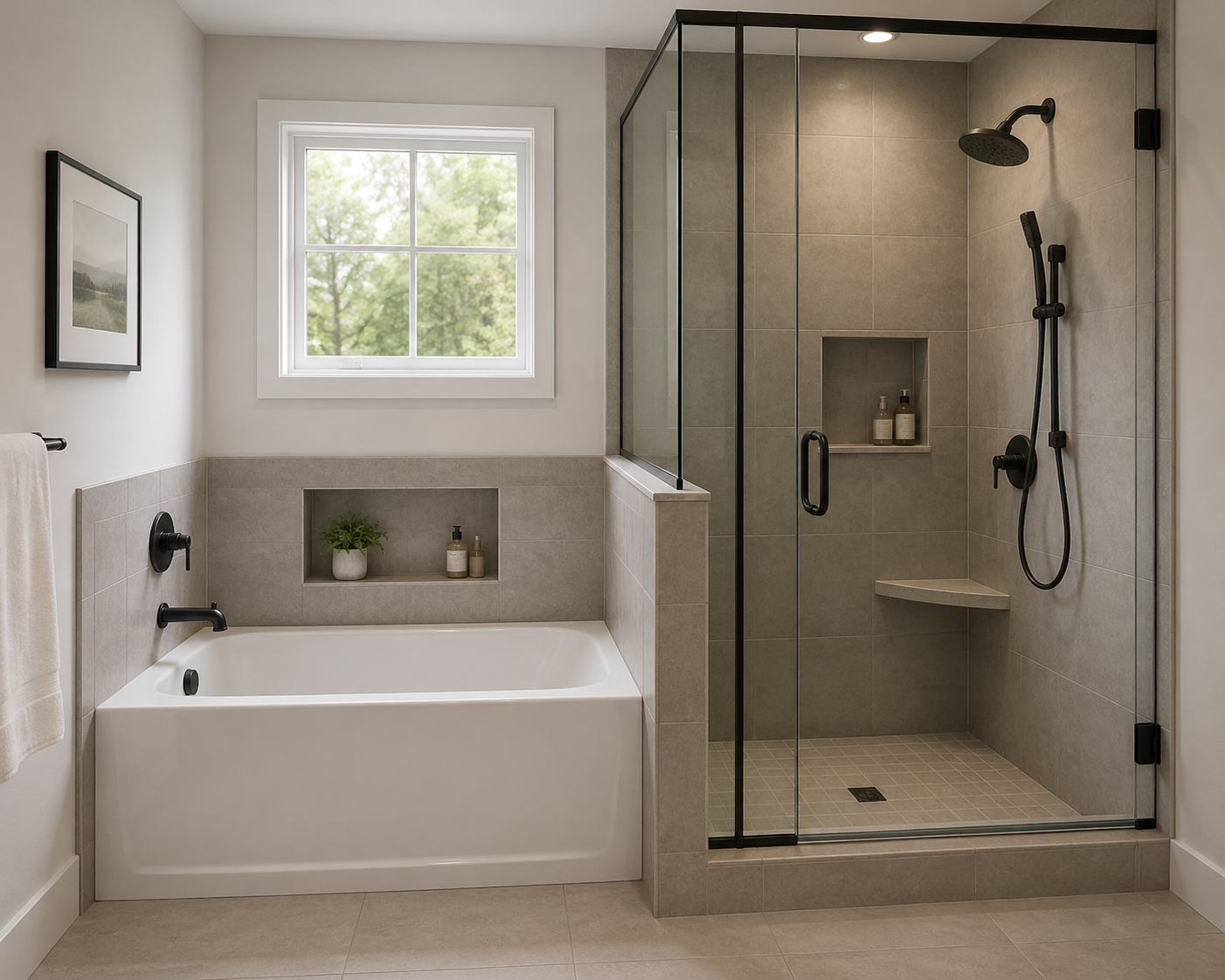
Recessed wall niches can keep bottles and everyday essentials within reach without occupying valuable shower space. Corner shelving may work well where wall depth does not allow recessed storage.
The ideal position depends on who will use the shower. Frequently used products should be easy to reach without requiring awkward stretching or bending.
Pay Attention to Water Management
A shower needs reliable waterproofing and drainage. Unlike a bathtub, where much of the water remains contained within the tub itself, a shower directs water across walls and flooring during everyday use.
Proper preparation behind visible finishes is therefore a critical part of a bathtub to shower conversion.
Water-resistant construction methods should address the shower base, walls, joints, corners, and penetrations around fixtures. Good drainage should also move water efficiently toward the drain and minimize areas where water can collect.
Select Materials With Maintenance in Mind
Appearance matters, but bathrooms also require surfaces that can handle frequent moisture and regular cleaning.
Balance Style and Practicality
Large wall surfaces with fewer joints can create a streamlined appearance and may simplify cleaning. Textured flooring can provide additional traction, while coordinated wall and floor finishes can help the shower feel visually connected to the rest of the bathroom.
When planning a bathtub to shower conversion, consider how materials will look after years of everyday use rather than focusing only on their initial appearance.
Use Lighting to Improve the Shower Area
Lighting has a major influence on bathroom comfort. An older tub enclosure may feel dark, particularly if curtains or solid barriers block available light.
A redesigned shower can create better sightlines and allow existing illumination to reach more of the bathing area. Additional bathroom-appropriate lighting may also improve visibility.
Transparent shower panels can contribute to a brighter, more spacious feeling while helping the new shower integrate with the overall room.
Avoid Designing Only for Current Trends
Bathroom styles change, but major renovations should remain appealing for years. Instead of relying heavily on short-lived trends, homeowners can create visual interest through smaller elements that are easier to update later.
A neutral foundation combined with complementary fixtures, practical storage, and simple details can give a bathtub to shower conversion a contemporary appearance without making it feel overly trendy.
Conclusion
Transforming a bathtub into a shower involves more than simply removing one fixture and installing another. The best results come from considering accessibility, dimensions, storage, waterproofing, drainage, lighting, and long-term maintenance together.
A bathtub to shower conversion can turn an underused bathing area into a comfortable and efficient part of the home. With careful planning and attention to everyday needs, homeowners can create a shower that feels spacious, looks inviting, and supports convenient bathroom routines for years to come.