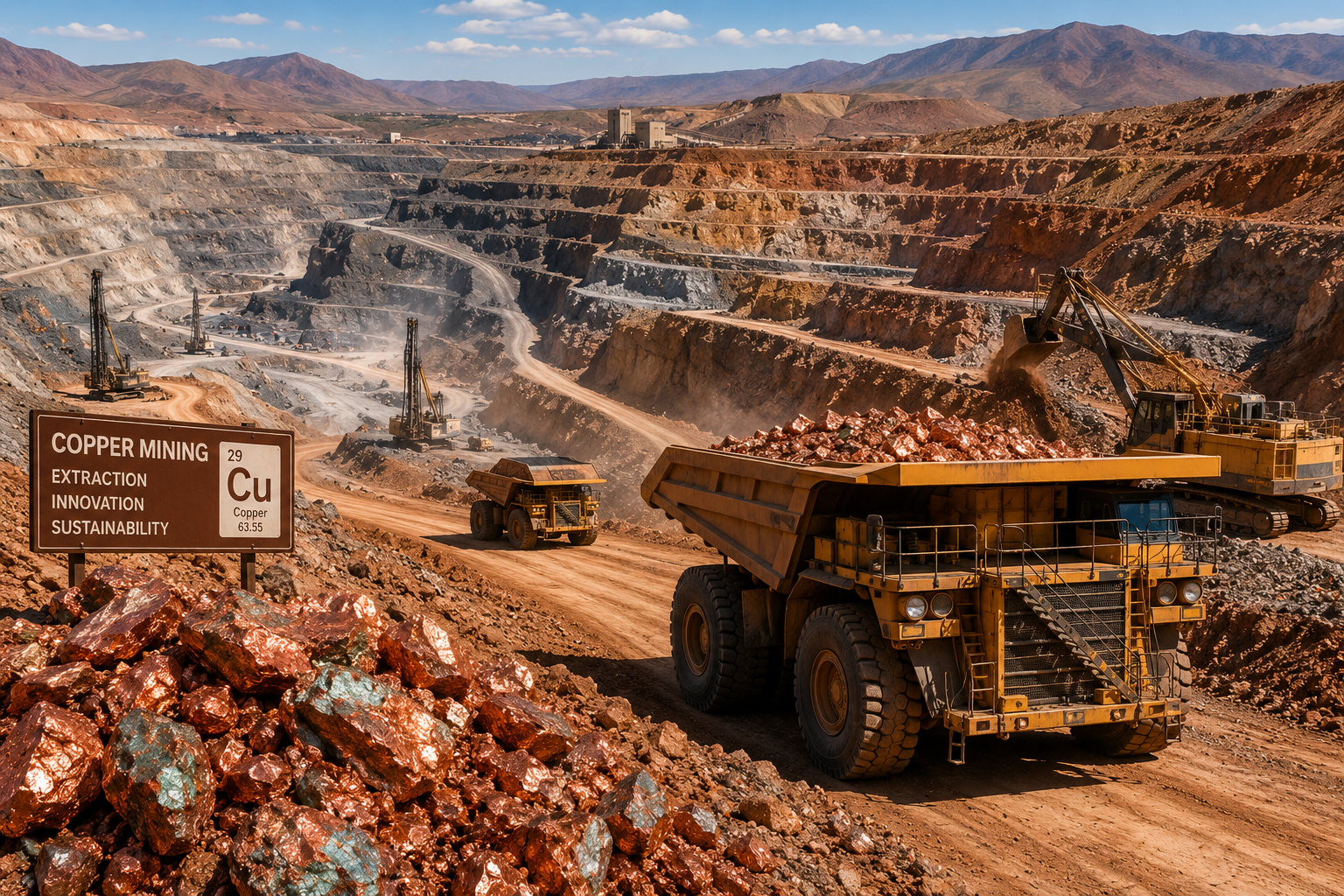
Mining in Michigan brings together natural resources, economic activity, environmental responsibility, and long-term community interests. Michigan’s unique geology contains mineral-bearing formations that have attracted attention for generations, especially in the northern part of the state. Today, however, mineral development is not simply about locating resources underground. Modern mining requires detailed studies, careful engineering, environmental monitoring, skilled workers, and planning that considers the complete life of a mine.
Understanding Michigan’s Mineral Potential
Michigan has a geological history extending back billions of years. Ancient volcanic activity, geological movement, heat, pressure, and mineral-rich fluids helped create rock formations containing valuable minerals.
This geological foundation makes Mining in Michigan an important subject for scientists, engineers, communities, and people interested in domestic mineral resources.
Before a mineral deposit can be evaluated for potential development, geologists need to understand its characteristics. They study surface formations, historical geological information, drill samples, and laboratory results.
These investigations can reveal where mineralized zones occur and provide insight into their size, depth, and composition.
Exploration Comes Before Development
Exploration is one of the least visible but most important stages of mining. A potential resource cannot be responsibly planned around without sufficient geological information.
Drilling allows specialists to retrieve sections of underground rock. Geologists examine these samples and use the information to create models of subsurface formations.
For Mining in Michigan, exploration results can influence almost every later decision. The location and shape of a deposit may determine potential access routes, mining methods, infrastructure requirements, and processing strategies.
Why Detailed Studies Matter
No two mineral deposits are exactly alike. Even deposits containing similar minerals can occur under very different geological and environmental conditions.
Detailed studies help technical teams identify these differences. Engineers can then evaluate possible approaches rather than relying on assumptions.
This site-specific perspective is fundamental to responsible Mining in Michigan because planning must reflect actual conditions.
Environmental Planning Starts Early
Environmental considerations do not begin after mining starts. Specialists can study existing conditions well before construction or extraction occurs.
Baseline investigations may examine groundwater, surface water, wetlands, vegetation, wildlife, soils, and other environmental features. These studies create a record of conditions before major site activity.
During Mining in Michigan, monitoring can continue so specialists can compare new information with baseline data.
Water Management Requires Attention
Water is particularly important because it moves through interconnected natural systems. Precipitation can create runoff, while groundwater may interact with underground workings.
Mine planning can include systems for collecting, directing, monitoring, storing, and treating water when necessary.
The appropriate approach for Mining in Michigan depends on local geology, hydrology, infrastructure, and operational conditions. Continuous information gathering helps environmental teams evaluate whether management measures are functioning as intended.
Skilled Workers Keep Operations Moving
Modern mining depends heavily on people with specialized skills. Although large equipment is often associated with the industry, many occupations operate behind the scenes.
Geologists interpret underground formations. Engineers design infrastructure. Mechanics maintain machinery, while electricians support complex electrical systems. Environmental specialists conduct monitoring, and safety professionals help manage workplace procedures.
Mining in Michigan may also create roles for surveyors, laboratory technicians, construction workers, equipment operators, administrators, and other professionals.
Skills That Reach Beyond Mining
Many abilities developed through mining work can transfer to other industries. Electrical knowledge, mechanical maintenance, engineering, environmental science, construction, and equipment operation have applications throughout the broader economy.
This means Mining in Michigan can contribute to workforce development as well as mineral production.
A technically experienced workforce may strengthen regional capabilities in infrastructure, manufacturing, transportation, and related fields.
Communities Have an Important Perspective
A mining operation exists within a larger social and economic setting. Nearby communities may experience changes in employment opportunities, transportation activity, infrastructure use, and demand for supporting services.
Residents naturally want to understand how Mining in Michigan could affect their surroundings.
Questions may focus on water, land use, environmental monitoring, jobs, roads, safety, and future reclamation. Providing understandable information can support more informed community discussions.
Technical documents can be complicated, so translating geological and engineering information into accessible language is particularly valuable.
Underground Mining and Surface Land Use
When mineral resources occur deep underground, underground extraction methods may provide access to targeted mineralized areas.
Workers can reach these areas through engineered ramps, tunnels, and other underground openings. Ventilation, ground support, communication systems, and transportation routes must be incorporated into the design.
Although underground Mining in Michigan takes place largely below the surface, supporting infrastructure is still needed above ground.
Careful site design can help organize these facilities while considering environmental features and operational efficiency.
Reclamation Shapes the Long-Term Picture
Mining operations have defined life spans. Once economically recoverable resources have been extracted, attention shifts from production toward closure and reclamation.
Reclamation may include securing underground access points, removing selected facilities, stabilizing disturbed land, managing water, and establishing vegetation where appropriate.
Responsible Mining in Michigan incorporates these future activities into earlier planning.
Monitoring Beyond Active Operations
Some environmental responsibilities can continue after extraction stops. Water conditions, vegetation, land stability, or other factors may require ongoing observation depending on the site.
Post-closure monitoring provides information about how reclaimed areas are performing over time.
Considering these requirements early helps Mining in Michigan projects approach closure as a planned stage of development rather than an unexpected final task.
Looking Toward the Future
Minerals remain important for construction, electrical infrastructure, transportation, manufacturing, and many technologies used in everyday life. At the same time, expectations surrounding environmental management and responsible land use continue to develop.
The future of Mining in Michigan will therefore depend on more than geological potential. Technical feasibility, worker safety, environmental safeguards, community interests, efficient resource use, and reclamation all matter.
Balancing these considerations requires reliable information and thoughtful planning throughout the mine life cycle.
Conclusion
Mining in Michigan illustrates how mineral development connects ancient geological resources with modern engineering, environmental science, skilled employment, and community considerations. Exploration establishes what lies underground, while careful design determines how resources might be accessed and managed. Environmental monitoring and reclamation extend responsibility beyond active extraction. Viewing mining through this complete life-cycle perspective provides a clearer understanding of how Michigan’s mineral resources can be considered alongside environmental protection and long-term regional needs.