That tiny mark on your windshield can be surprisingly easy to overlook. A stone hits the glass, leaves a small chip, and the vehicle continues to drive normally. Since the damage appears minor, many drivers decide to deal with it another day. Unfortunately, windshield chips do not always remain the same size.
Road vibration, moisture, temperature fluctuations, and additional impacts can put stress on damaged glass. Seeking windshield chip repair london ontario early gives drivers an opportunity to address the affected area before a small problem develops further.
How Does a Windshield Chip Happen?
Most windshield chips begin with a sudden impact. Loose stones and road debris can be thrown into the air by moving vehicles, particularly on highways, gravel roads, and construction routes.
When an object strikes the windshield, the outer glass can develop a small impact point. The damage may look like a dot, pit, circular mark, or a combination of short cracks.
The windshield may still appear strong afterward, but the affected area has already experienced stress.
Some Chips Are Easy to Miss
Not every chip immediately attracts attention. Small impact marks near the passenger side or lower portion of the windshield can remain unnoticed until the glass is cleaned.
Checking the windshield regularly helps drivers identify these marks sooner. Good lighting can make tiny cracks around an impact point easier to see.
Why Can a Small Chip Start Spreading?
Glass reacts to physical pressure and changes in temperature. A damaged windshield is repeatedly exposed to both.
Imagine driving over a deep pothole with an existing chip. The vehicle experiences a sudden jolt, and that vibration travels through its structure. Although the windshield is designed for normal driving forces, an already weakened point may react differently.
Temperature changes can create another challenge. During colder months, drivers often warm the cabin while the outside surface of the windshield remains extremely cold. In summer, intense sunlight followed by rapid cooling can produce the opposite effect.
These changes can increase stress around existing damage.
When Should a Chip Be Inspected?
There is little benefit in waiting for visible damage to become larger before seeking an assessment. Ideally, a newly discovered chip should be examined promptly.
Pay closer attention if:
- Small cracks are extending from the impact point
- The damage is close to the windshield edge
- The chip is directly within the driver’s viewing area
- The damaged section appears to be changing
- More than one impact point is present
- Dirt or moisture is collecting inside the chip
An assessment can provide a clearer picture of the condition of the glass.
What Happens During Chip Repair?
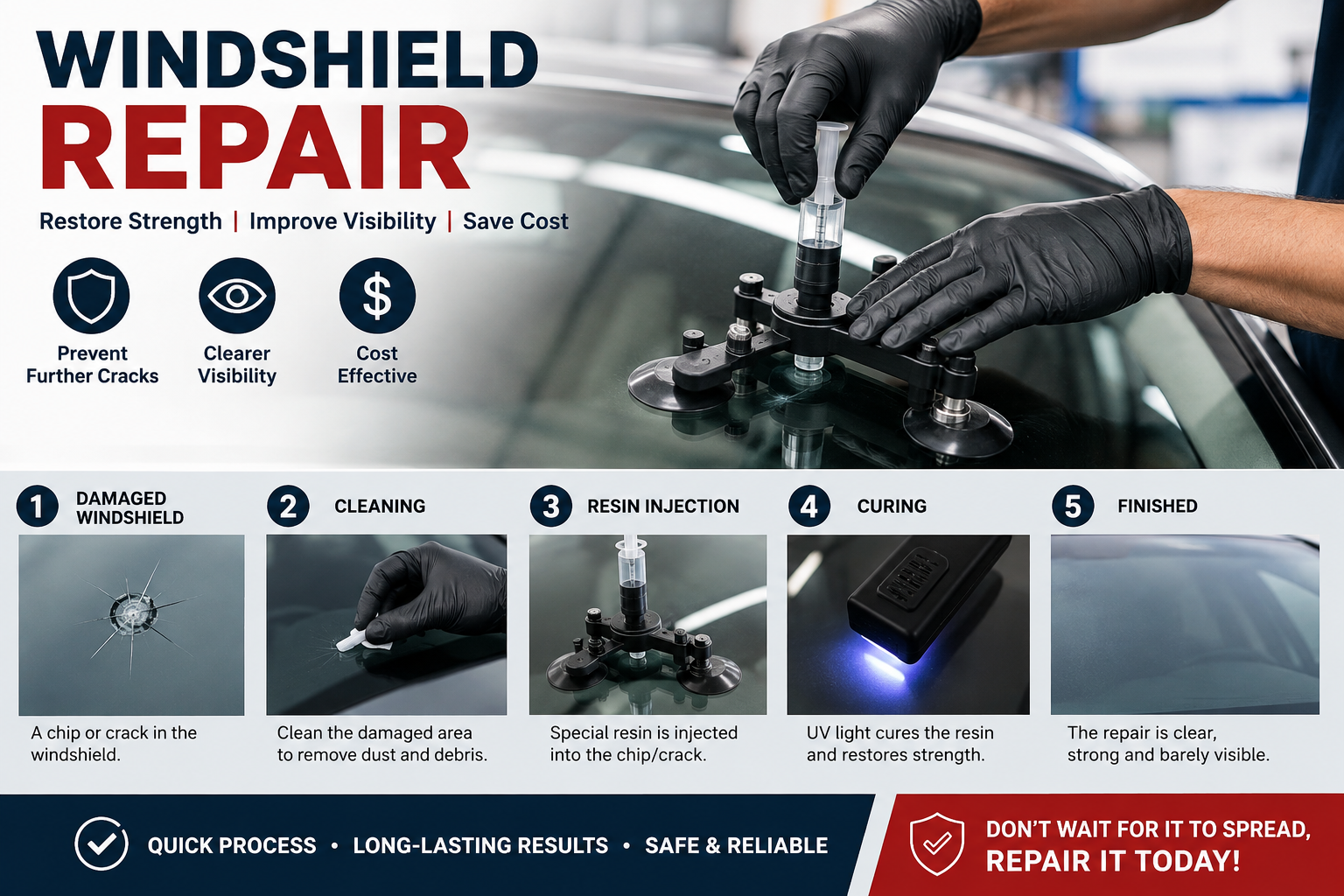
The purpose of professional chip repair is to address a localized damaged area before further cracking develops. The exact process depends on the type and condition of the impact.
First, the damaged section is examined. Its depth, shape, position, and overall condition help determine whether repair is suitable.
The area may then be prepared so the damage can be treated appropriately. Because every impact differs, drivers should avoid assuming that two similar-looking chips will require exactly the same approach.
Why Clean Damage Is Easier to Evaluate
A fresh chip can gradually collect water, dust, road grime, and other contaminants. For this reason, repeatedly touching the damaged area is not helpful.
Drivers should also avoid attempting to dig material out of the impact point with sharp objects. Professional assessment is a safer approach than experimenting with damaged vehicle glass.
Repairability Depends on More Than Size
Drivers often assume that every small chip can be repaired and every large mark requires another solution. In reality, size is only one consideration.
Depth matters. Location matters. The presence of spreading cracks matters as well.
Damage close to the windshield perimeter can require particular attention because stresses around the edge may affect how the glass behaves. Similarly, damage positioned directly in the driver’s line of sight deserves careful evaluation.
Drivers looking for local windshield chip assistance can arrange an assessment instead of relying on guesswork.
How to Reduce the Risk of Future Chips
Stone impacts cannot always be avoided, but drivers can limit some common risks.
Maintain additional following distance behind vehicles travelling on loose or damaged road surfaces. Construction zones deserve extra attention because gravel and debris may be present.
Slowing down on rough roads can also reduce harsh vibration. Meanwhile, regular windshield cleaning makes new impact marks easier to notice.
Do Not Forget Your Wiper Blades
Worn wipers can reduce visibility and may drag dirt across the glass. Inspect them periodically and replace them when they begin streaking, skipping, or failing to clear water effectively.
Keeping the windshield clean also makes it easier to distinguish actual glass damage from stubborn dirt.
Conclusion
A windshield chip may be small, but its condition can change as the vehicle encounters rough roads, moisture, seasonal temperatures, and daily driving stress. Ignoring the damage simply leaves more time for those factors to affect it.
Regular inspections and prompt professional assessment are practical habits for drivers who want to maintain clear, dependable vehicle glass. Avoid extreme temperature changes, keep a sensible distance from vehicles throwing road debris, and pay attention to new impact marks.
Most importantly, do not judge windshield damage by appearance alone. Having a chip examined early provides a better understanding of its condition and helps determine the most appropriate next step before a minor mark has the opportunity to become a larger problem.